1. Food Processing Wastewater Requires Application-Specific Equipment
Variable Loads, High Organic Content and Demanding Operating Conditions
Food processing wastewater can contain high concentrations of organic matter, suspended solids, fats, oils and grease (FOG). Wastewater flow and composition may also vary with production schedules and cleaning operations. ODMS helps engineering teams select equipment based on actual wastewater characteristics, treatment objectives and site conditions.
01 | High Organic Loads
Biological Treatment Requires Reliable Oxygen Supply
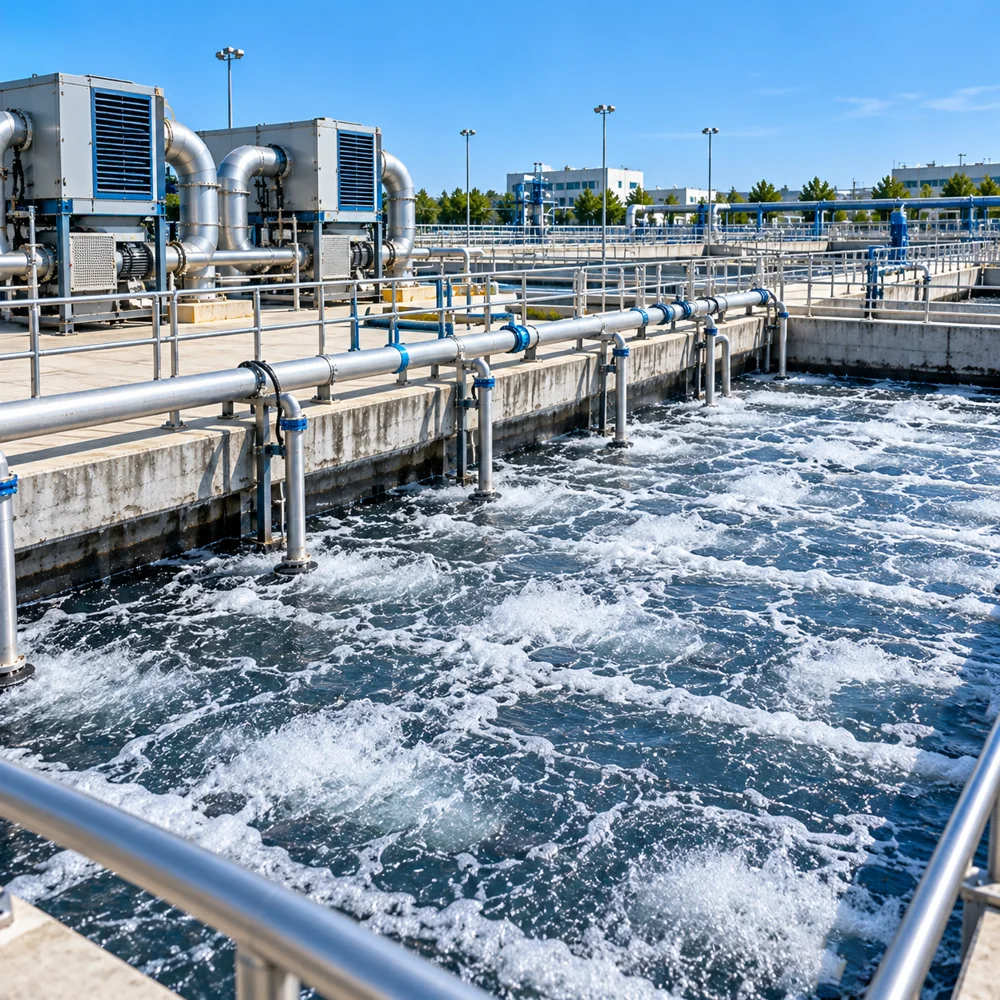
High BOD and COD loads can increase oxygen demand in aerobic treatment processes, making blower capacity, diffuser performance and airflow control important design considerations.
02 | Fats, Oils & Suspended Solids
Effective Pretreatment Protects Downstream Processes
FOG and suspended solids can increase treatment loads and interfere with downstream equipment. Screening, flotation and chemical dosing should be selected according to wastewater characteristics.
03 | Fluctuating Flow & Pollutant Loads
Equipment Must Accommodate Production Variations
Changes in production volume, cleaning cycles and wastewater composition require equipment operating ranges and controls suited to the expected variations.
04 | Sludge Handling & Operating Costs
Dewatering Performance Affects Disposal Requirements
Sludge characteristics, feed solids concentration and target cake dryness influence dewatering equipment selection, chemical consumption and downstream handling costs.
2. Equipment Solutions Across Key Treatment Stages
From Pretreatment and Flotation to Biological Aeration and Sludge Dewatering
ODMS supplies wastewater treatment equipment for key stages of food processing wastewater treatment. Equipment configurations are selected according to wastewater characteristics, treatment capacity, process design and project requirements.
01 | Wastewater Transfer & Preliminary Screening
Equipment: Submersible Sewage Pumps · Rotary Drum Microscreen Filters
Pumps support wastewater transfer, while rotary drum microscreen filters remove applicable suspended solids and particulate materials. Equipment selection considers flow rate, solids characteristics, screen opening size and hydraulic conditions.
02 | Physicochemical Treatment & Flotation
Equipment: Dissolved Air Flotation (DAF) Systems · Chemical Dosing Systems
DAF systems, supported by suitable chemical dosing where required, separate floatable solids, fats, oils and grease. Equipment is configured according to wastewater characteristics, solids loading and treatment objectives.
03 | Biological Treatment & Aeration
Equipment: Magnetic Levitation Turbo Blowers · Disc Diffusers · Tube Diffusers · TPU Aeration Hoses · Submersible Mixers · Flow Propellers
ODMS supports biological treatment through coordinated air supply, oxygen transfer and hydraulic mixing. Blower and diffuser configurations are matched to oxygen demand, tank geometry, operating water depth, airflow and pressure requirements.
04 | Sludge Collection & Dewatering
Equipment: Sludge Scrapers · Multi-Disc Screw Presses · Decanter Centrifuges · Polymer Preparation & Dosing Systems
Sludge collection, conditioning and dewatering equipment is selected according to the treatment process, sludge characteristics, solids concentration, required capacity and target cake dryness.
CTA: Discuss Your Equipment Requirements
3. Engineered Around Your Wastewater Conditions
From Wastewater Data to Equipment Configuration
ODMS supports equipment selection based on actual wastewater characteristics and process requirements. We review treatment loads, equipment operating ranges and installation interfaces to help EPC contractors and engineering teams reduce selection mismatches and integration risks.
01 | Wastewater & Process Data Review
Selection Based on Actual Treatment Requirements
Review wastewater flow, COD, BOD, TSS, FOG, pH, temperature and expected load variations to establish equipment selection requirements.
02 | Equipment Capacity & Process Matching
Equipment Sized for Design and Operating Loads
Evaluate screening capacity, DAF loading, pump duty points and sludge dewatering requirements to recommend suitable equipment models and configurations.
03 | Aeration System Engineering
Blowers and Diffusers Matched to Oxygen Demand
Coordinate blower airflow and discharge pressure with diffuser selection, oxygen demand, operating water depth and piping losses to support reliable biological treatment.
04 | Installation & Interface Coordination
Designed to Fit New and Existing Facilities
Review equipment dimensions, hydraulic elevations, piping connections, electrical supply, control interfaces and maintenance access to support system integration.
4. Reliability Is Engineered — Not Assumed
Built Into Equipment Selection, Engineering Coordination and Delivery Verification
Food processing wastewater projects require equipment that can operate under demanding conditions and integrate with the selected treatment process. ODMS focuses on reliable configuration, engineering coordination and delivery verification to support project implementation.
01 | Reliable Equipment Configuration
Selected for Actual Wastewater Conditions
Equipment models, materials and key components are evaluated against wastewater characteristics, operating requirements and project specifications, with configurations and supply scope clearly defined.
02 | Precision Engineering Coordination
Technical Interfaces Reviewed Before Delivery
Equipment dimensions, hydraulic connections, electrical requirements, control interfaces and maintenance access are reviewed to help reduce installation conflicts and integration risks.
03 | Rigorous Delivery Verification
Inspection and Testing Against Agreed Requirements
Applicable inspections, functional checks and equipment tests are conducted according to equipment type and agreed project requirements, with relevant documentation available for review.
5. Get Equipment Recommendations for Your Food Processing Wastewater Project
Share Your Wastewater Data. Get Equipment Recommendations Matched to Your Process.
Whether you're developing a new treatment facility, expanding capacity or upgrading existing equipment, ODMS can review your wastewater characteristics, treatment process and equipment requirements to recommend suitable configurations.
Share your wastewater flow, COD, BOD, TSS, FOG, treatment objectives and project specifications to start a technical discussion.
CTA: Request Equipment Selection & Quot