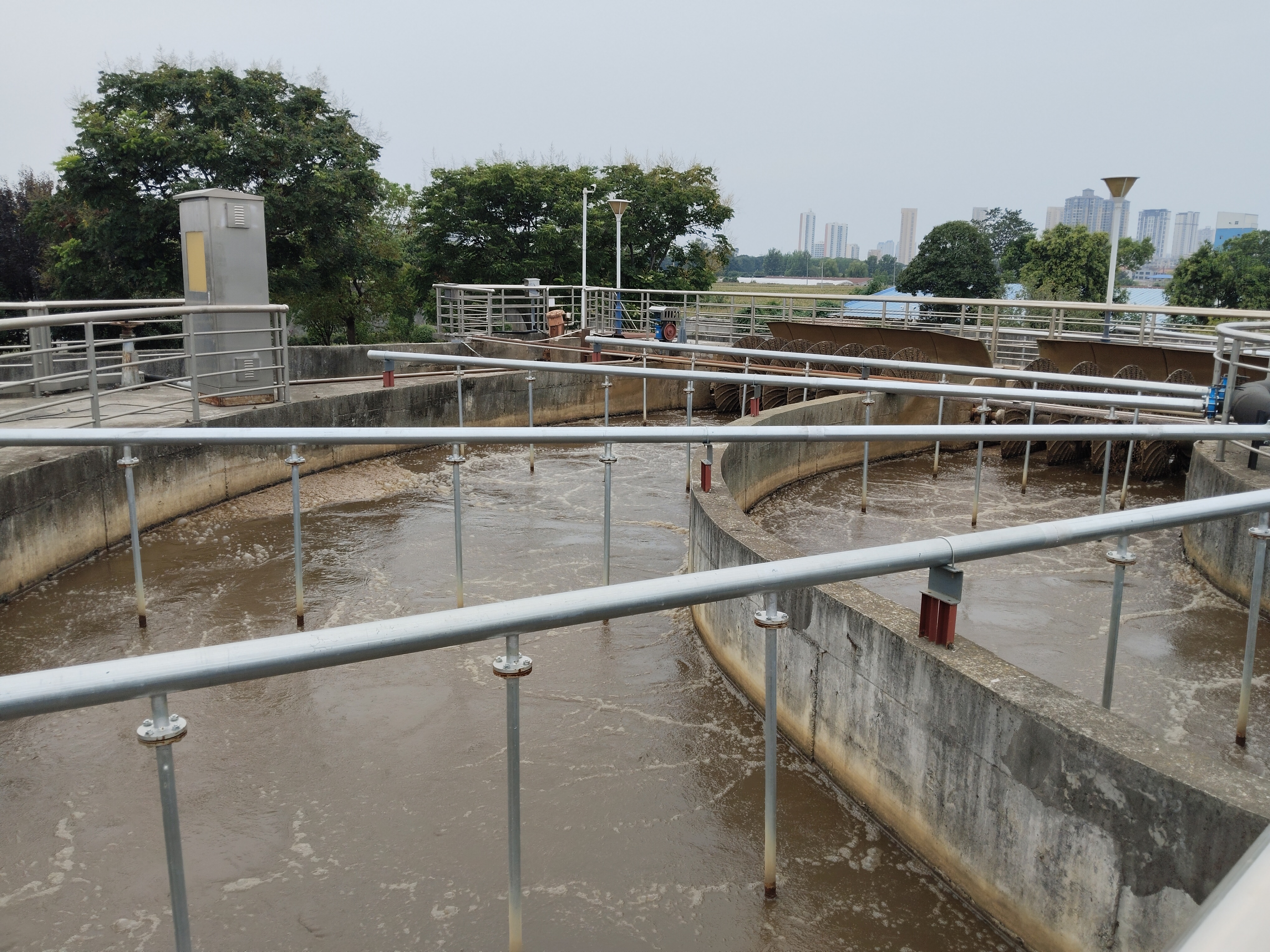
1. Premier Quality Starch Cassava Starch Wastewater Treatment Project, Thailand
Project Type: Cassava Starch Processing Wastewater Treatment
Design Treatment Capacity: 2,500 m³/d
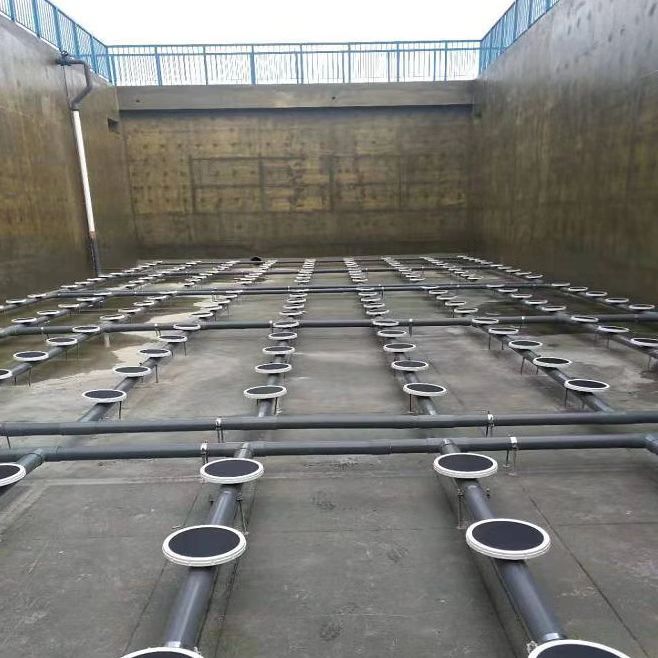
Key Equipment: Bottom-Mounted Fine-Bubble Aeration System
This project serves a large cassava starch production facility in Thailand, where wastewater treatment must address high organic concentrations and substantial pollutant loading. According to the project data, the influent COD is 5,000 mg/L, BOD₅ is 2,500 mg/L and ammonia nitrogen is 600 mg/L.
To address the high organic load, the project incorporates a bottom-mounted fine-bubble aeration system to supply oxygen for aerobic biological treatment. The system supports microbial degradation of organic pollutants and related biological treatment processes, helping meet the project's treatment and effluent quality requirements.
Location: Thailand
Treatment Capacity: 2,500 m³/d
Wastewater Type: Cassava Starch Processing Wastewater
Key Technology: Bottom-Mounted Fine-Bubble Aeration + Aerobic Biological Treatment
2. Project Challenges: Meeting Aeration Demands Under High Organic Loading
Cassava starch wastewater typically contains high concentrations of organic pollutants and can impose a substantial biodegradable organic load on the treatment process. The aeration system must supply sufficient air while accounting for tank geometry, treatment loading and biological process requirements.
01 | High COD and Biological Treatment Demand
The project influent has a reported COD of 5,000 mg/L and BOD₅ of 2,500 mg/L. Microorganisms require oxygen to degrade biodegradable organic matter, and insufficient oxygen supply may compromise aerobic treatment performance.
02 | Consistent Air Supply and Oxygen Transfer
The aeration system must provide a stable air supply and transfer oxygen effectively into the wastewater. Increasing airflow alone does not necessarily improve oxygen utilization.
03 | Appropriate Oxygen Distribution Throughout the Tank
Diffuser layout, bubble distribution, water depth and hydraulic conditions all affect oxygen transfer. Uneven aeration may result in localized oxygen deficiencies or inefficient air use.
04 | Matching Equipment to Process Requirements
Airflow, operating pressure, diffuser resistance and biological tank design must be coordinated to meet oxygen demand while managing operating energy consumption.
3. Our Solution: Bottom-Mounted Fine-Bubble Aeration
To address the high organic loading associated with cassava starch wastewater, the project incorporates a bottom-mounted fine-bubble aeration system to provide air and oxygen transfer for aerobic biological treatment.
01 | Bottom-Mounted Fine-Bubble Aeration
Diffusers installed at the tank bottom disperse air into the wastewater, increasing gas-liquid contact and supplying oxygen for aerobic microorganisms to degrade organic pollutants.
02 | Air Supply Designed Around Biological Treatment
The aeration system supports the overall aerobic treatment process. Airflow and diffuser layout should be determined according to tank geometry, treatment loading and process oxygen demand, rather than maximizing airflow alone.
03 | Coordinated Blower and Diffuser Performance
Diffuser operation must be matched to blower capacity, system operating pressure and pipeline resistance to achieve the required air distribution under design conditions.
04 | Equipment Configuration Based on Treatment Objectives
Equipment selection should be checked against influent characteristics, design treatment capacity and target effluent quality. Dissolved oxygen, pollutant removal and aeration performance should be evaluated through operational monitoring.
This configuration provides an essential oxygen supply for the project's aerobic biological treatment. Actual oxygen transfer performance and operating results should be assessed using project design parameters and operating data.
4. Project Value: Aeration Designed for High-Load Biological Treatment
ODMS's value lies not only in supplying aeration equipment, but also in configuring an aeration system around the wastewater characteristics and biological treatment requirements of the project.
01 | Oxygen Supply for Organic Pollutant Degradation
The bottom-mounted fine-bubble aeration system supplies air for aerobic biological treatment, providing the oxygen required for microorganisms to degrade biodegradable organic matter.
02 | Support for Stable Biological Treatment
Appropriate coordination of diffuser layout, air supply capacity and tank conditions helps maintain the oxygen supply required by the biological process. Actual performance also depends on the overall treatment process, biomass condition and operational control.
03 | Equipment Support for Effluent Quality Objectives
The project data specify influent and treated-effluent indicators, providing reference targets for equipment configuration and treatment process evaluation. Aeration is an important part of biological treatment, while final effluent quality depends on the complete treatment system.
04 | Balancing Oxygen Demand and Operating Energy
Selecting equipment based on oxygen demand, airflow, operating pressure and diffuser performance helps avoid mismatches between equipment configuration and process requirements. Actual energy savings must be verified through operating data.
05 | A Relevant Aeration Application for Starch Processing Wastewater
The project demonstrates the application of bottom-mounted fine-bubble aeration in industrial wastewater treatment under high organic loading, providing a reference for aeration equipment selection in similar starch-processing projects.
5. Why Choose ODMS for Industrial Wastewater Aeration?
Equipment Selection Based on Real Process Requirements
01 | Application-Focused Engineering
We consider wastewater characteristics, treatment capacity, tank conditions and oxygen demand when evaluating aeration equipment configurations.
02 | Aeration System Coordination
Blowers and diffusers must work together. We focus on matching airflow, operating pressure and diffuser requirements to the intended process conditions.
03 | Equipment Supply for Industrial Applications
From equipment selection to supply coordination, we support wastewater treatment projects that require aeration solutions suited to specific industrial wastewater characteristics.
04 | A Practical Basis for Technical Evaluation
We encourage project teams to assess equipment suitability using design parameters, technical documentation and operating data rather than relying solely on generic performance claims.
For starch-processing wastewater and other high-organic-load applications, the appropriate aeration configuration should be determined through process-specific engineering evaluation.
6. Need an Aeration Solution for High-Load Industrial Wastewater?
Every wastewater treatment project has different organic loading, oxygen demand, tank conditions and operating requirements. ODMS can help evaluate suitable aeration equipment configurations based on your project data.
Share your requirements to discuss:
- Wastewater type and design treatment capacity;
- Influent COD, BOD₅ and other available water quality data;
- Aeration tank dimensions and water depth;
- Existing blower and diffuser specifications, if applicable;
- Target effluent quality and project requirements.
CTA: Discuss Your Project with Our Engineering Team