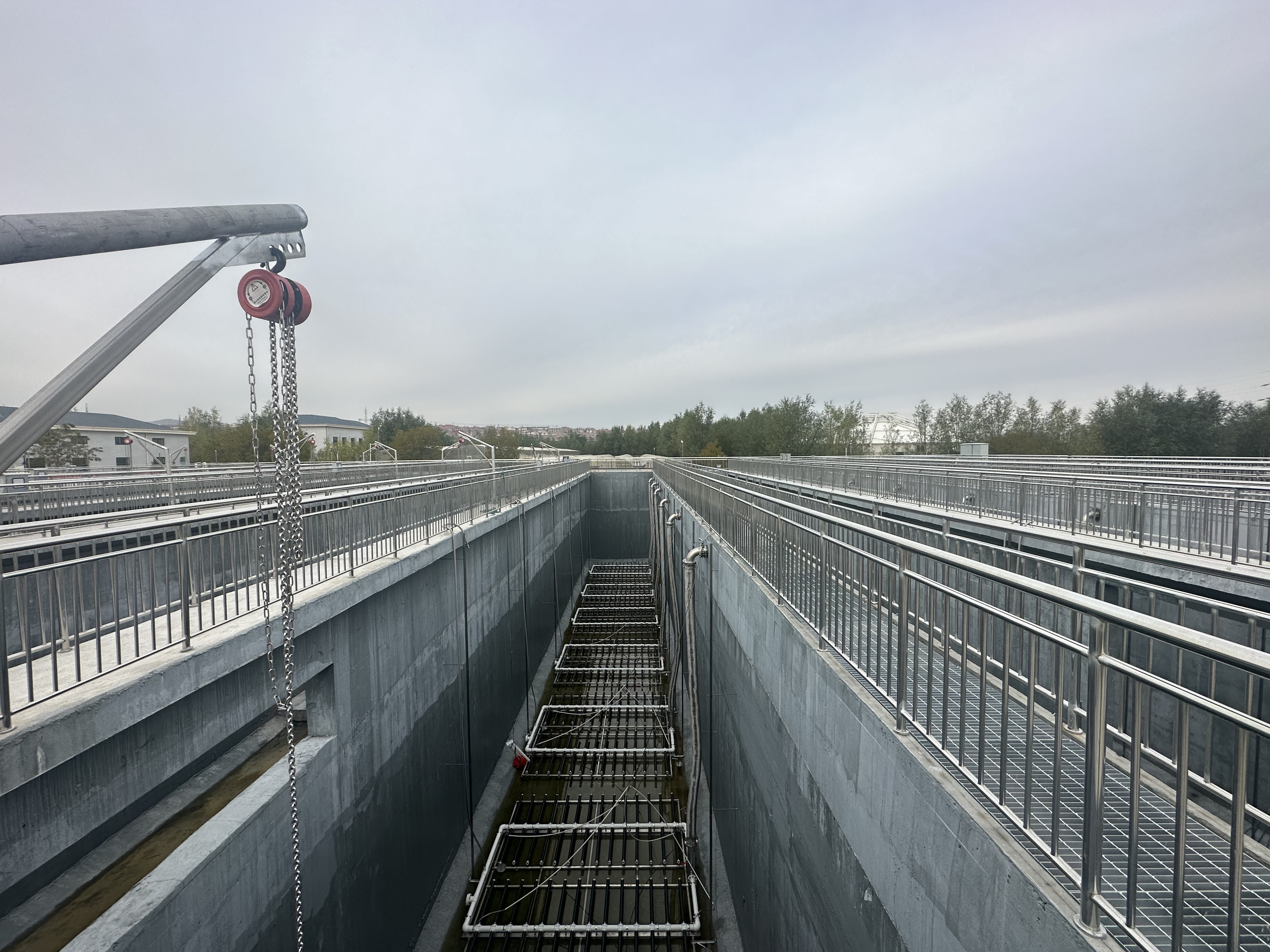
1. Municipal Wastewater Treatment for a Malaysian Township
Project Type: Municipal Domestic Wastewater Treatment
Service Population: Approximately 600,000 residents
Estimated Average Daily Flow: 126, 000 m³/d
Application: Centralized municipal wastewater collection and treatment.
A township serving approximately 600,000 residents requires a wastewater treatment system capable of handling substantial daily flows while maintaining stable biological treatment, effective solids separation and reliable sludge management.
Using a preliminary planning assumption of 225 litres per person per day, the estimated average wastewater flow is approximately 135,000 m³/d. The final design capacity must be confirmed using the actual sewerage catchment, population equivalent, flow monitoring data and future development projections.
For a project of this scale, ODMS equipment can support key treatment stages, including wastewater transfer, biological aeration, tank mixing, sludge collection and mechanical dewatering.
Potential ODMS Equipment: Submersible Sewage Pumps · Magnetic Levitation Turbo Blowers · Aeration Diffusers · Submersible Mixers · Sludge Scrapers · Multi-Disc Screw Presses.
2. Six Key Considerations for Large-Scale Municipal Wastewater Treatment
01 | High Daily Flow and Variable Hydraulic Loading
A large service population creates substantial daily wastewater flows. Pumping systems and treatment units must accommodate average flows, peak-hour loading and variations caused by rainfall or infiltration.
02 | Stable Oxygen Supply for Biological Treatment
Aerobic treatment requires an appropriately designed air supply system. Blower capacity, diffuser performance, tank depth and oxygen demand must be coordinated to support biological treatment without unnecessary energy consumption.
03 | Effective Mixing in Anoxic and Anaerobic Zones
Where the selected biological process includes anoxic or anaerobic tanks, mixing equipment must maintain suitable circulation and keep solids suspended without introducing unwanted oxygen.
04 | Reliable Solids Separation
Primary or secondary clarification, where included in the process, requires suitable sludge collection arrangements to maintain effective solids separation and facilitate sludge withdrawal.
05 | Sludge Volume and Disposal Management
Sludge generated during treatment must be collected, conditioned where necessary and dewatered before transportation or disposal. Dewatering equipment should match sludge characteristics and required throughput.
06 | Equipment Coordination and Long-Term Maintenance
Large treatment facilities require coordination between pumping, aeration, mixing, clarification and sludge handling. Maintenance access, spare parts, equipment reliability and operating costs should be considered during selection.
3. An Integrated Equipment Approach Across the Treatment Process
ODMS equipment can be selected to support the major process stages of a municipal wastewater treatment plant. The final configuration depends on the process design, hydraulic profile, wastewater characteristics and site conditions.
01 | Wastewater Transfer — Submersible Sewage Pumps
Selected pumps transfer wastewater from collection wells and lift stations to the designated treatment units. Pump capacity, total dynamic head, solids passage and duty/standby arrangements must be determined from hydraulic calculations.
02 | Biological Aeration — Magnetic Levitation Turbo Blowers and Aeration Diffusers
Turbo blowers provide process air, while disc or tube diffusers distribute air within aerobic tanks. Airflow, operating pressure and diffuser layout should be designed around oxygen demand, water depth and the biological process.
03 | Tank Mixing — Submersible Mixers
In anoxic, anaerobic or equalization tanks where required, submersible mixers maintain circulation and prevent excessive solids settlement. Mixer selection depends on tank geometry, liquid characteristics and required mixing intensity.
04 | Clarification — Sludge Scrapers
Where settling tanks are included, sludge scrapers collect settled solids and direct them toward the sludge withdrawal point. Equipment type and dimensions must match the clarifier configuration.
05 | Sludge Dewatering — Multi-Disc Screw Press
The screw press mechanically dewaters suitable sludge to reduce its water content and volume. Selection requires assessment of sludge type, feed solids, required throughput and target cake solids.
06 | Process-Level Coordination
Equipment selection should be coordinated with the process flow diagram, design capacity, hydraulic conditions, installation interfaces and control requirements. A large municipal plant may require multiple units operating in parallel, rather than one oversized machine.
4. Equipment Solutions Designed Around Municipal Treatment Needs
01 | Support for Large-Scale Wastewater Transfer
Appropriately selected submersible sewage pumps help manage wastewater transfer between collection, lifting and treatment units, based on the plant's hydraulic requirements.
02 | Coordinated Aeration and Oxygen Supply
Matching turbo blowers with aeration diffusers helps establish the required process air supply. Correct sizing and control can help avoid unnecessary airflow and pressure losses, with actual energy performance verified through engineering calculations and operational data.
03 | Suitable Mixing for Biological Process Zones
Submersible mixers support circulation and solids suspension in tanks where mechanical mixing is required, helping maintain the intended process conditions.
04 | More Organized Sludge Collection and Dewatering
Sludge scrapers and screw presses support different stages of sludge management, from collection to mechanical dewatering, helping reduce the volume of sludge requiring subsequent handling.
05 | Coordinated Equipment Procurement
Sourcing several equipment categories through ODMS can help consolidate technical communication and equipment coordination. Final project value depends on confirmed equipment specifications, supply scope, installation arrangements and actual operating results.
5. Why ODMS for Municipal Wastewater Projects?
Equipment Selection Based on Engineering Requirements
01 | Multi-Stage Equipment Coverage
ODMS offers equipment for wastewater transfer, biological aeration, tank mixing, sludge collection and mechanical dewatering, supporting multiple stages of municipal wastewater treatment.
02 | Process-Oriented Selection
Equipment recommendations should be based on design flow, hydraulic calculations, oxygen demand, tank dimensions, sludge characteristics and applicable discharge requirements.
03 | Coordination Between Blowers and Diffusers
Aeration system performance depends on the combined operation of air supply equipment and diffusers. ODMS can support equipment evaluation around required airflow, operating pressure and installation conditions.
04 | Sludge Handling Equipment Options
The sludge scraper and screw press serve different functions within the sludge line. Their selection should match the clarifier layout, sludge properties and required dewatering capacity.
05 | Technical Coordination for Project Teams
For EPC contractors, consultants and plant operators, a clear equipment scope, technical documentation and defined interfaces help support procurement, installation planning and commissioning coordination.
6. Planning a Municipal Wastewater Treatment Project in Malaysia?
Whether you are developing a new treatment plant, upgrading existing facilities or replacing ageing equipment, ODMS can help evaluate suitable equipment configurations based on your project requirements.
To support an initial technical review, please share:
- Service population and design average/peak flow;
- Treatment process and process flow diagram;
- Aeration tank dimensions and design oxygen demand;
- Pumping flow rate and total dynamic head;
- Clarifier dimensions and sludge handling requirements;
- Existing equipment specifications, if this is an upgrade project.
CTA: Discuss Your Project with ODMS
Our team can review the available information and help identify suitable equipment options for your municipal wastewater treatment application.